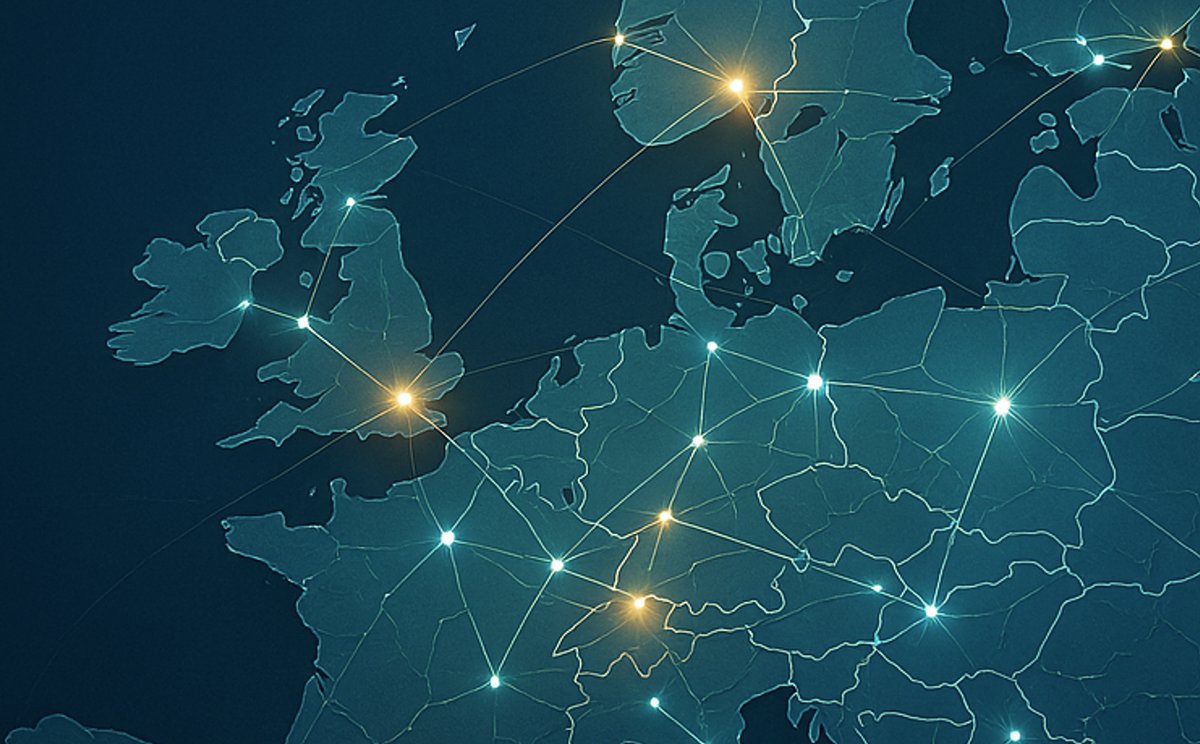

When Microsoft's own lawyer told the French Senate he couldn't guarantee European data stays in Europe, it wasn't a surprise. It was a confirmation. The question now isn't whether Europe should reduce its dependence on US tech — it's how to do it without replacing one dependency with another.
In June 2025, under oath before French senators, Microsoft France's director of public and legal affairs admitted what European CIOs had long suspected: if the US government demands access to European data under the CLOUD Act, Microsoft is legally obligated to comply. It doesn't matter that the data sits in a Frankfurt data center. It doesn't matter that no such request has been made yet. The legal architecture makes it possible — and in the current geopolitical climate, possible is no longer an acceptable risk.
The reaction across Europe has been swift. France is replacing Teams and Zoom with a sovereign videoconferencing platform called Visio. Germany's Schleswig-Holstein has cancelled 70% of its Microsoft licenses, migrating 44,000 inboxes to open-source alternatives. Denmark, Italy's military, and Austria's armed forces are all moving away from Microsoft Office. The International Criminal Court in The Hague switched to a European office suite after its chief prosecutor was temporarily locked out of his Outlook account — by a company subject to US government sanctions policy.
This is no longer a fringe movement. It's a continental shift.
But Here's the Problem Nobody Wants to Talk About
EU is not one country. It is 27 member states with different regulatory traditions, different technology stacks, different procurement cultures, and — critically — different definitions of what "digital sovereignty" even means.
France wants centralized EU procurement with a "Buy European" mandate. Germany wants an open, globally integrated approach. The Nordic and Baltic states worry that "European sovereignty" is a polite way of saying "French and German corporate dominance." Ireland fears anything that threatens its role as the European headquarters for US tech giants. Eastern European countries lack the domestic tech ecosystems to build alternatives and wonder who, exactly, benefits when Paris and Berlin set the rules.
At the Franco-German Digital Sovereignty Summit in Berlin in November 2025, this tension was visible. France pushed for European preference in public procurement. Germany's Digitalisation Minister declined to support it. Even Austria's delegation noted that there is no shared definition of "digital sovereignty" among EU member states.
So Europe faces a paradox: the continent is more united than ever in wanting to reduce its dependency on US technology, yet more divided than ever on what the alternative looks like.
The Missing Layer: Integration Across Borders, Systems, and Trust Boundaries
Here's what the sovereignty debate consistently overlooks: the hardest problem isn't building individual European tools. France has Visio. Germany has OpenDesk. There are European cloud providers, European identity solutions, European collaboration suites. The hard problem is making them work together — across different countries, different systems, and different regulatory frameworks — without creating new lock-in.
This is an integration problem. And it's exactly where Europe's fragmented approach creates the most friction.
Consider a realistic scenario: a European manufacturer operates across France, Germany, and Poland. Their French division uses sovereign cloud services certified under SecNumCloud. Their German operations run on an OpenStack-based private cloud. Their Polish subsidiary still relies on Azure because no viable local alternative existed when they signed the contract. Each jurisdiction has slightly different data residency rules, different compliance requirements under NIS2 and DORA, and different interpretations of how the AI Act applies to their automated processes.
Who connects these systems? Who ensures that data flows respect every jurisdictional boundary while still enabling the business to function as one organization? Who governs which AI models process what data, and where?
Today, the answer is usually: expensive consultants, months of custom development, and a prayer that nothing changes. That's not sovereignty. That's fragility.
Why AI-Native Integration Changes the Equation
This is the problem that FastHub was built to solve — not by adding another tool to Europe's growing catalogue of sovereign alternatives, but by providing the connective layer that makes all of them useful together.
FastHub is an AI-native integration platform, built in Finland, running on 100% EU-hosted infrastructure, constructed entirely from open-source components: Kubernetes, Keycloak, Open Policy Agent, Apache Camel, Quarkus, LokiDB, Valkey, Elasticsearch. No proprietary black boxes. No dependencies on any single vendor — American, Chinese, or European.
The "AI-native" distinction matters. Traditional integration platforms require specialized developers who understand both the source and target systems, the data formats, the authentication protocols, and the business logic in between. This is why integrations typically take weeks, cost hundreds of euros per hour in consultant fees, and create their own form of vendor lock-in — because once built, only the people who built them understand how they work.
FastHub inverts this model. Describe what you need to connect in plain language. The AI generates the integration workflow. Review it, adjust it, deploy it — to FastHub's managed cloud or to your own infrastructure. One person can now manage what previously required a team of specialists.
But here's the part that matters for sovereignty: FastHub is agnostic by design. It doesn't care whether you're connecting a French sovereign cloud to a German open-source collaboration suite, or bridging an Estonian e-government system with a Finnish healthcare platform. It doesn't push you toward any particular vendor or ecosystem. It connects whatever you have to whatever you need, under whatever compliance rules apply.
Open Source Isn't a Feature — It's a Trust Architecture
When we say FastHub is built on 100% open-source components, this isn't a technical footnote. It's a direct response to the central challenge of European digital sovereignty: how do you trust the tools that manage your trust boundaries?
In a world where even Microsoft admits it can't resist a US government subpoena for European data, the provenance and transparency of every layer in your technology stack matters. Open-source code can be audited. It can be forked. It can be operated by any organization, in any jurisdiction, without permission from a parent company that might be subject to foreign law.
This is precisely what 63% of European technology and policy leaders identified as critical in Wire's 2025 sovereignty survey: open-source software as a foundational requirement for genuine digital independence. Not because open source is inherently better software, but because it's the only software whose loyalty can be verified.
FastHub's stack — Kubernetes for orchestration, Keycloak for identity, Open Policy Agent for authorization, Apache Camel for routing, Quarkus for runtime performance — represents mature, battle-tested technologies maintained by global communities. No single company can pull the rug. No foreign government can compel a backdoor. And any customer can inspect every line of code that touches their data.
Finland: The Trusted Neutral Ground
FastHub's Finnish origin is not incidental. Finland occupies a unique position in Europe's sovereignty landscape.
As a founding member of the D9+ coalition of digitally advanced small nations, Finland has historically championed open markets and interoperability over protectionism. The country leads the EU in generative AI adoption — 66% of Finnish firms use generative AI tools, nearly double the EU average. Finland hosts LUMI, one of the world's most powerful supercomputers and a cornerstone of Europe's AI Factory network.
But Finland is also geopolitically neutral in the intra-European sovereignty debate. A Finnish platform doesn't carry the protectionist baggage of a French product or the industrial-policy implications of a German one. For smaller EU member states worried that "European sovereignty" means submitting to Paris and Berlin's tech agenda, a Finnish solution offers a pragmatic middle ground: genuinely European, demonstrably open, and free from the gravitational pull of any single large member state.
What Practical European Digital Sovereignty Actually Looks Like
The European Commission published its Cloud Sovereignty Framework in October 2025, defining eight sovereignty objectives and a new SEAL scoring mechanism for cloud procurement. It launched a €180 million tender for sovereign cloud services. The upcoming Cloud & AI Development Act will bring further requirements.
For European organizations — public and private — this means sovereignty is no longer optional. It's becoming a procurement requirement. And the organizations that will thrive are those that can demonstrate compliance across jurisdictions while still moving fast enough to compete globally.
This is where the combination of AI-native integration and open-source architecture becomes transformative:
Automated compliance mapping. When you connect systems across multiple EU jurisdictions, FastHub's policy engine can enforce data residency rules, consent requirements, and AI governance policies automatically — not as an afterthought, but as an inherent part of every integration workflow.
AI model governance. As the AI Act takes effect, organizations need to know which AI models process which data, in which jurisdiction, with what level of human oversight. An AI-native integration platform makes this auditable by default.
Zero vendor lock-in. Deploy on any infrastructure — your own servers, a European cloud provider, or a hybrid of both. Migrate between providers without rebuilding your integrations. This is the promise of interoperability that GAIA-X envisioned but struggled to deliver in practice.
Democratized expertise. Europe's tech talent shortage is real. By enabling non-specialists to build and manage enterprise-grade integrations through natural language, FastHub directly addresses the bottleneck that slows down every sovereignty migration: the scarcity of people who know how to make it all work together.
The Real Question
Europe's digital sovereignty debate has been dominated by grand visions — Eurostacks, sovereign clouds, Buy European mandates, €12 billion investment pledges. These matter. But sovereignty isn't delivered through summits and declarations. It's delivered through the mundane, essential, everyday work of connecting systems, moving data, and keeping organizations running.
The question isn't whether Europe will build sovereign alternatives to US technology. It already is. The question is whether those alternatives will work together — across borders, across systems, across the trust boundaries that make Europe both complex and democratic.
That's an integration problem. And it deserves an integration answer.
FastHub is an AI-native integration platform built in Turku, Finland. It launches on April 1, 2026. Built entirely on open-source technologies and hosted 100% within the EU, FastHub enables organizations to build, deploy, and manage enterprise-grade integrations through natural language — no specialized consultants required. Join the waitlist to be among the first to experience a new way of building integrations.